Project summary
Barr Publications Scholarly Press (founded by Penny Ann Barr) publishes the Journal of Artificial Intelligence, Governance and Smart Systems (JAIGSS). It’s an open access, peer reviewed journal. The journal covers the impact of machine learning, algorithmic management and generative AI on institutional governance and public administration. Its audience is researchers, prospective authors and public sector practitioners.

My role
Agota Studio designed and built the site in Webflow (which covered the responsive layouts, the CMS collections for the articles and editorial board members and the handover so that the journal team can add content themselves).
Requirements
- Show what the journal is about in a nutshell to the researcher who is making a decision in seconds as to whether it’s relevant to their work.
- Look clean, professional and classy (in the client’s own words) using the press’ own deep maroon and dark grey.
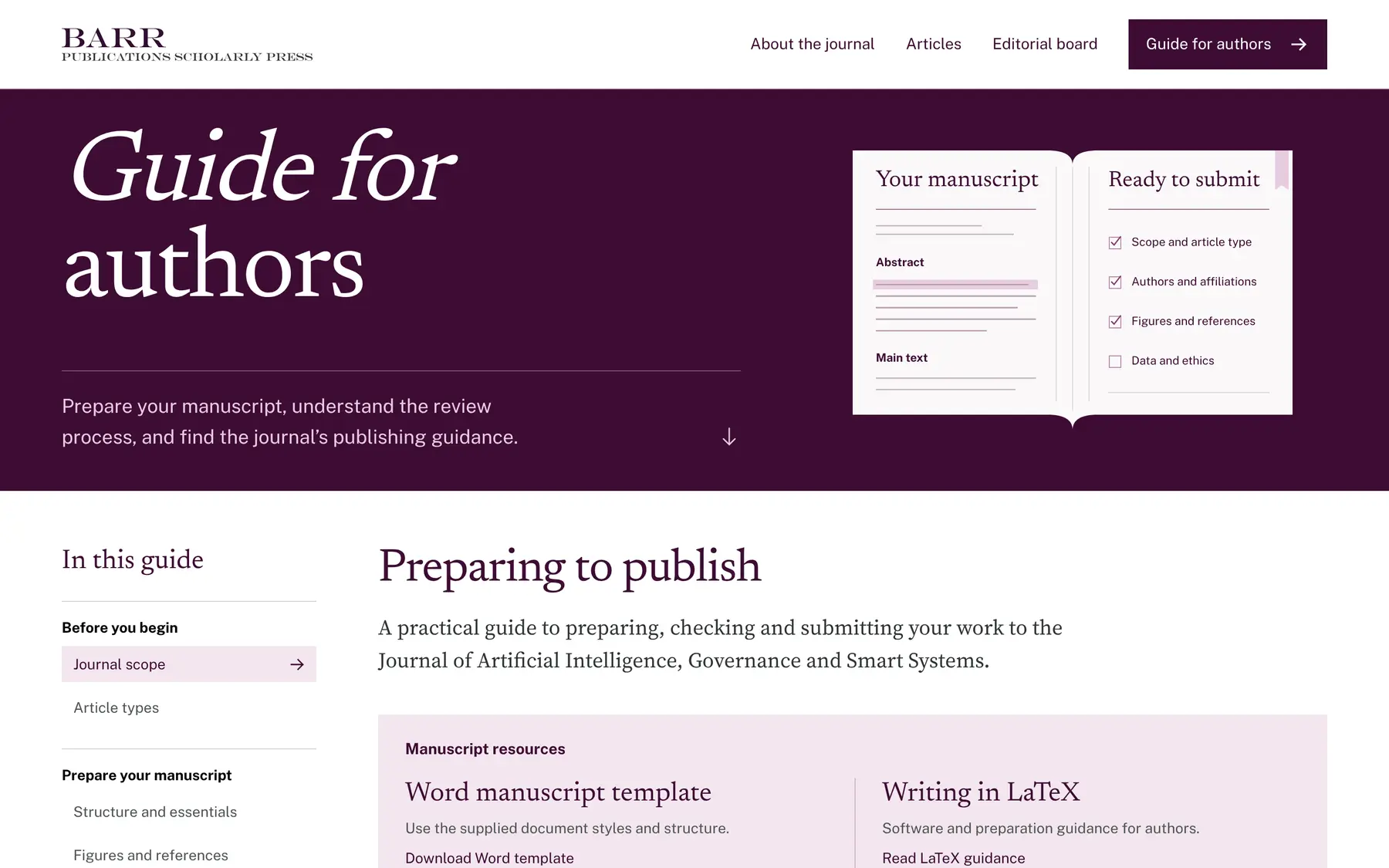
- Give authors a clear path from manuscript preparation through to peer review and to open access.
- Present the editorial board as a credibility signal, with space for members to be added as they are recruited.
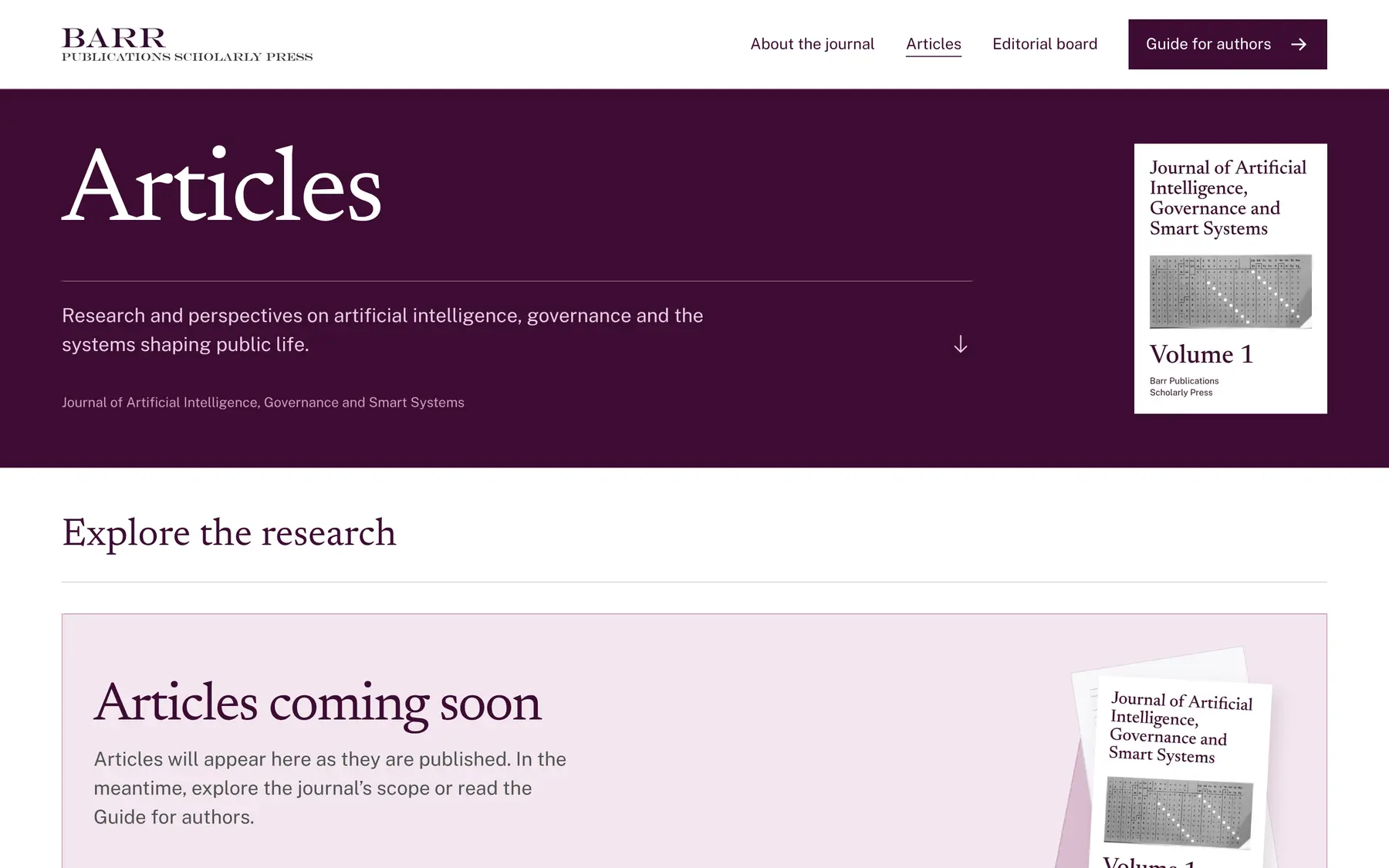
- Work prior to launch, with an articles section all ready for the first issue.
Implementation decisions
- A scholarly typeface in combination. An elegant serif for the headlines and article titles. A clean sans-serif for the body copy and labels. Deep maroon banner on every page to link in with the Barr Publications logo.
- Scope as thematic tracks. The subject area is broken down into cards (AI driven public administration, algorithmic management and labor governance, ethics, compliance and policy design etc) so you can see at a glance where your topic fits.
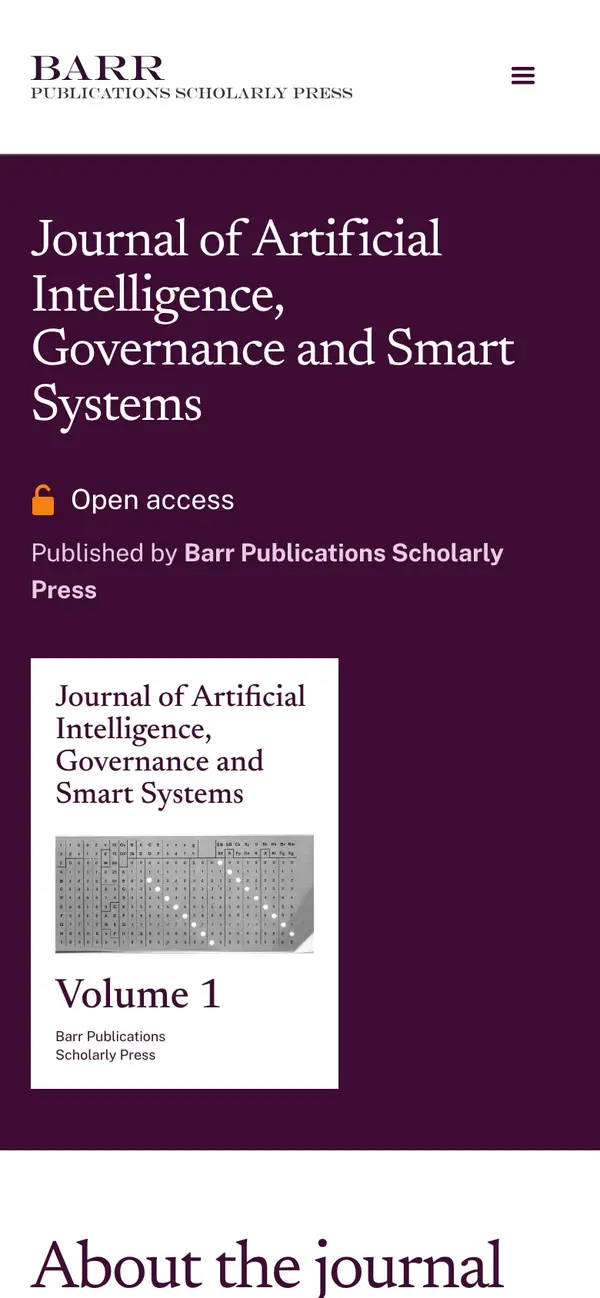
- A nod to early computing. A public domain photo of the UNIVAC I and a punched card motif on the Volume 1 cover, linking the subject of AI governance with the history of administrative computing.
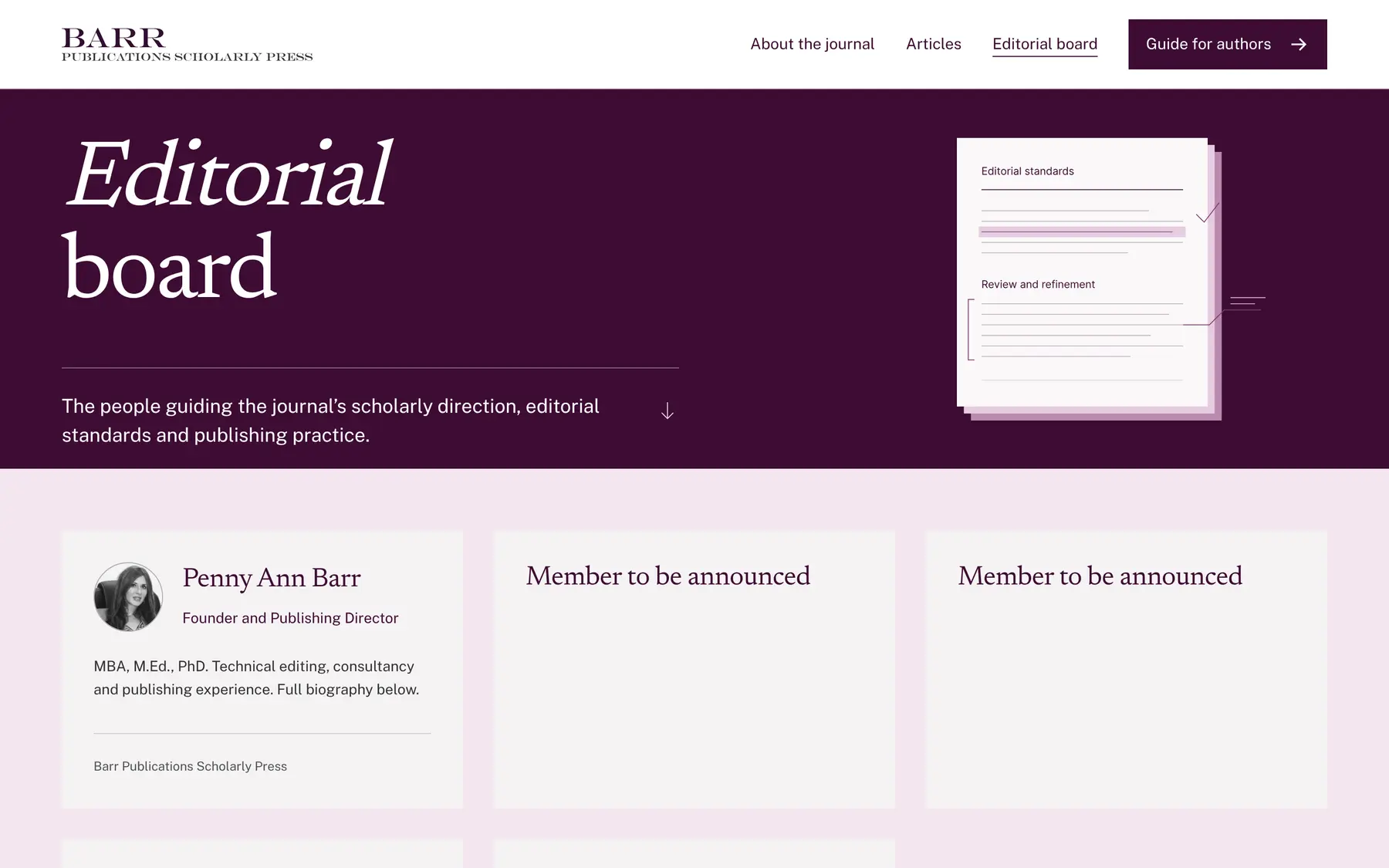
- An editorial board that can grow. Each member has a photo, name, role, affiliation and a short bio, all managed in the CMS. The cards for any roles that aren’t yet filled just say that. The page works regardless of how many members of the board there are.
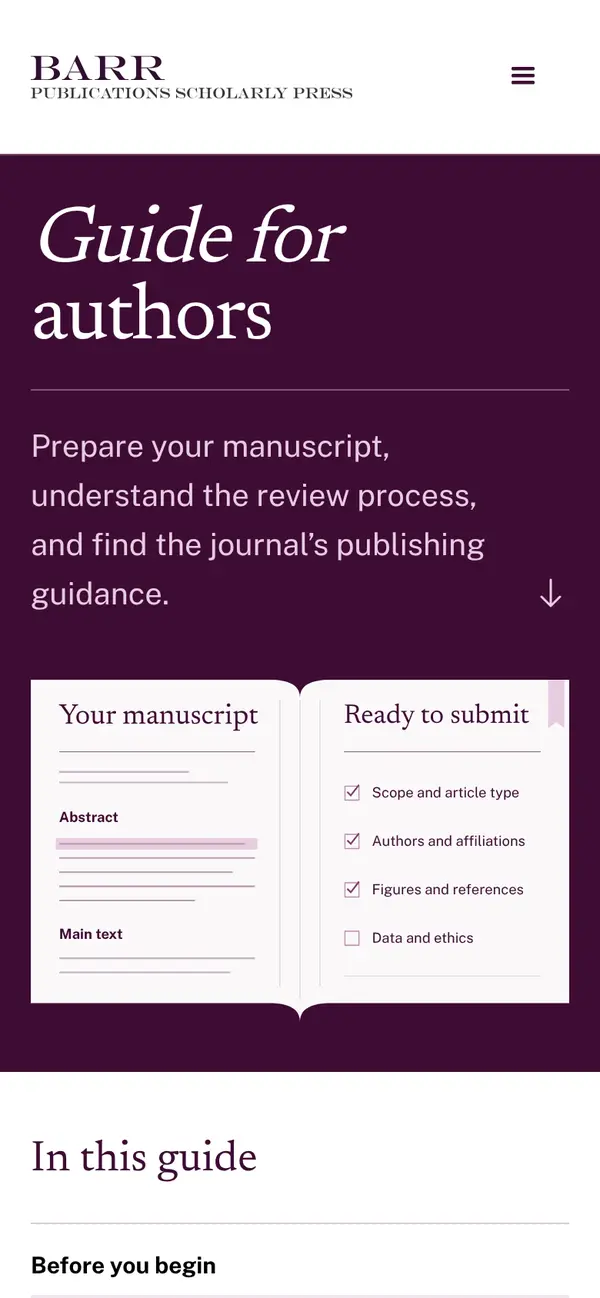
- A guide for authors which is very easy to navigate. The page has a sticky ‘In this guide’ contents menu with section links, grouped into stages (before you begin and preparing your manuscript etc). The Word and LaTeX resources are at the top so you can get to them without having to scroll.
- A designed empty state. The articles page states that articles will appear as they are published and points to the journal’s scope and the guide for authors rather than showing a blank list. Both the articles CMS and the article page template are ready for the first paper.
- Built for a phone. The layouts work at mobile width with a menu button in the header and the cover and text stacked in a single column.
- Accessibility basics. Skip link, alt text on relevant images, visible link underlines on the current page and a privacy notice page.
What the build includes
- Journal landing page with scope and thematic tracks
- Editorial board page, editable through the CMS
- Guide for authors with a sticky contents menu and downloadable manuscript templates
- Articles section ready to fill as papers are published
What it demonstrates
How to give a brand new scholarly journal a credible, easy to scan home prior to the first issue going out.