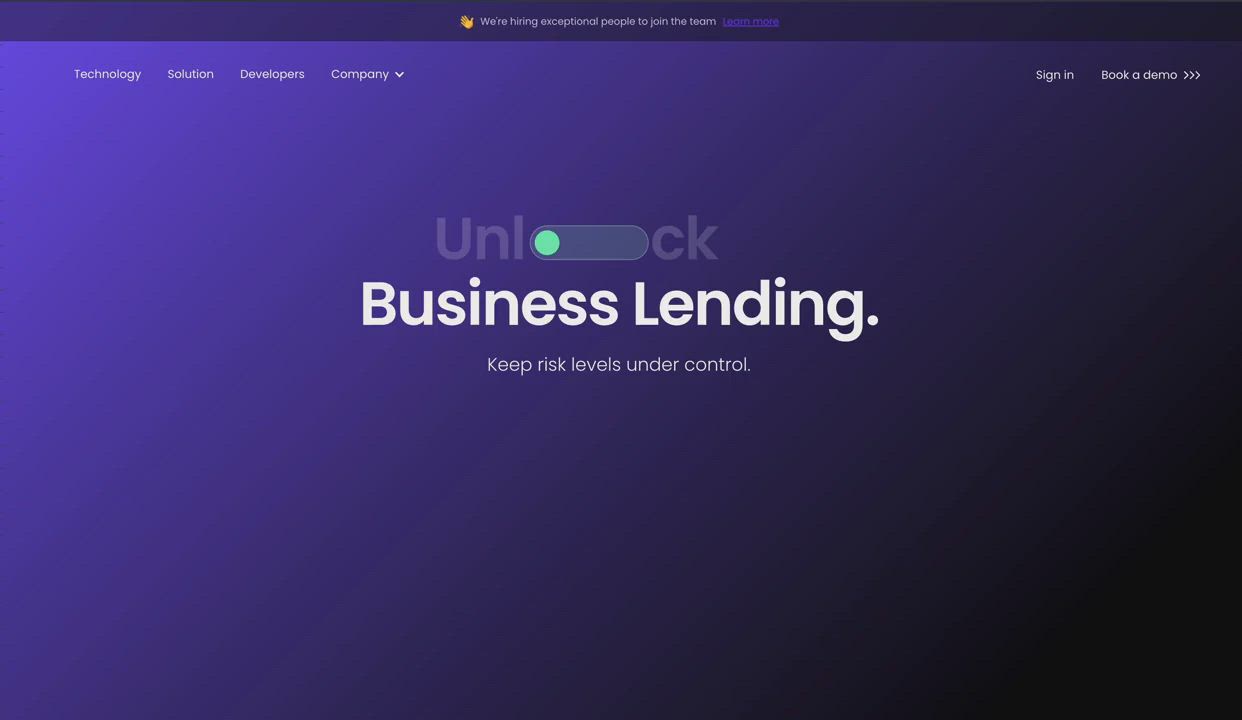
A large product site for an AI lending platform, with a mega menu and Rive, Lottie and three.js motion.
AI & SaaS companies
I design and build Webflow sites for AI and SaaS companies that ship fast and need their website to keep up. That means a page system marketing can use to launch features and campaigns without engineering, motion that explains the product, and pages that load fast.
Requirements
Software, and AI especially, is hard to show. Product animations, interface snippets and diagrams do more than stock imagery.
Launches, integrations, comparison pages and campaigns can’t wait for engineering sprints. Marketing needs to build them alone.
Logos, testimonials, case studies and security information need to appear wherever a buyer hesitates.
Buyers increasingly ask AI assistants for tool recommendations. Clear product pages and accurate structured data help assistants describe you correctly.
Implementation
Each item names the project where it’s built. Items marked optional are work I can do, not something shown in the projects above.
Heroes, feature grids, logo walls and calls to action as reusable sections, so new landing pages start from parts that already match.
Rive, Lottie and GSAP animations that walk through how the product works.
Blog posts, customer stories and resources as CMS collections the team adds to.
Navigation for products, solutions, use cases and resources that stays usable as the offer grows.
It separates the marketing site from the product codebase. Marketing teams can publish pages, run experiments and update content without engineering time, while developers stay focused on the product. Webflow also handles hosting and SSL; page performance still depends on the build.
Yes. Webflow supports Lottie and Rive elements, and its interactions can use GSAP alongside Classic Interactions. Custom code is an option for specialised behaviour. Lama AI’s site, for example, combines Rive, Lottie and three.js. Loading them only when visible helps keep pages fast, though the build still decides the result.
Yes. One option is CMS-driven comparison templates, so each competitor gets a page with the same structure and comparison table, and your marketing team can add new ones. With only a few competitors, individual pages can be simpler.
Show up when buyers ask an AI assistant who to hire.